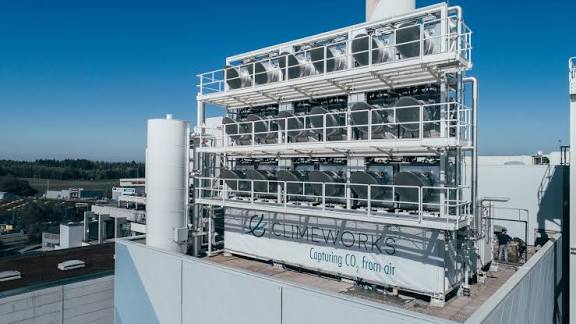
The global transition toward net-zero industrial operations relies heavily on the rapid development, commercialization, and scaling of Carbon Capture, Utilization, and Storage (CCUS) technologies. From Point-Source Carbon Capture on heavy industrial emissions to atmospheric Direct Air Capture (DAC) systems, carbon management technology represents an essential pillar for hard-to-abate sectors such as cement, steel, chemical manufacturing, and maritime transport.
CCUS Scaling Friction & Risk Taxonomy
Risk Vectors, Primary Drivers & Commercial Impact Reasoning Flow
| Risk Vector | Primary Driver | Commercial Impact | ||
|---|---|---|---|---|
| Public Acceptance & Community Resistance | Safety fears, pipeline route opposition, “moral hazard” | Permitting halts, litigation delays | ||
| Policy & Capital Instability | High CapEx, evolving tax credits, regulatory shifts | Stranded assets, delayed FID | ||
| Industrial Offtake Coordination | High cost per ton, fragmented transport/storage ecosystems | Pipeline network underutilization |
Despite strong policy momentum including U.S. Inflation Reduction Act (45Q) tax credits, the EU Innovation Fund, and regional industrial decarbonization mandates, carbon management projects encounter significant non-technical barriers. Commercialization faces public skepticism, safety concerns around carbon dioxide pipelines and geological storage, complex cross-sector industrial coordination, and intense scrutiny from institutional ESG investors.
To derisk multi-billion-dollar investments, secure final investment decisions (FID), and win long-term social license to operate, carbon technology developers, industrial conglomerates, and infrastructure funds must execute an integrated Carbon Capture & Decarbonization Technology Positioning Strategy.
By simply translating complex carbon removal science, addressing community safety and permanence concerns, securing sovereign co-investment, building cross-sector industrial coalitions, and delivering verifiable carbon metrics to capital markets, industrial leaders convert emerging climate technologies into bankable, socially accepted assets.
& Clarity
Permanence Assurance
Coalition Execution
CCUS Positioning Framework
I. Translating Complex Climate Tech: Explaining Direct Air Capture (DAC) and Point-Source Storage Simply
Carbon management technologies span a broad spectrum of engineering disciplines, chemical processes, and geological science. When corporate communications rely on dense jargon such as supercritical carbon dioxide phases, liquid solvent absorption, chemical looping combustion, or deep saline aquifer mineralization, public stakeholders and non-technical decision-makers can become disengaged or suspicious. A strategic positioning framework translates technical engineering into clear, accessible, and scientifically accurate public statements.
Climate Tech Translation Matrix
Technical Terminology to Strategic Public Narrative
| Technology Vector | Technical Engineering Term | Clear Strategic Public Translation |
|---|---|---|
| Point-Source Carbon Capture | Post-combustion amine solvent scrubbing & regeneration | “Capturing industrial emissions at the smokestack before entering the air” |
| Direct Air Capture (DAC) | Solid-sorbent atmospheric direct carbon extraction | “Removing legacy carbon directly from ambient air” |
| Permanent Geological Storage | Supercritical carbon dioxide injection into basaltic rock or deep saline formations | “Safely storing carbon miles deep underground where it turns to stone” |
1. Differentiating Point-Source Capture vs. Atmospheric Removal
Public discourse often conflates point-source industrial capture with direct air removal, creating confusion over costs, energy inputs, and environmental objectives. Strategic positioning clearly distinguishes these two technology vectors.
Climate Tech Categorization Flow
Carbon Capture, Removal & Permanent Storage Pathway
Capture Abolish
Capture Reverse
Geological Storage Lock Away
CCUS Technological Framework & Strategic Positioning
Core Categories & Mitigation Narratives at a Glance
2. Creating Analogies for Complex Engineering Systems
To foster public understanding and policy alignment, complex engineering components should be communicated through clear, accurate analogies.
Technical Analogy Translation Framework
Bridging Complex Engineering Mechanics with Public Understanding
| Complex Engineering Concept | Technical Mechanics | Accessible Public Analogy |
|---|---|---|
| Chemical Solvent Absorption | Reversible chemical bonding of carbon dioxide to amines under low thermal conditions. |
A Chemical Sponge Absorbs carbon and releases it when gently heated. |
| Geological Trap Integrity | Impermeable caprock overlaying porous sandstone formations. |
A Natural Stone Vault A multi-layer, miles-thick underground storage system. |
Carbon Capture & Storage Conceptual Analogies
Visualizing Chemical Capture & Geological Sequestration Mechanics
Solvent-based capture operates like a liquid sponge that selectively attracts and holds carbon dioxide gas from flue emissions, releasing concentrated carbon when heated so it can be safely stored.
Deep geological formations act as subterranean vaults where carbon is injected thousands of feet below freshwater tables, held securely under dense rock layers, and naturally mineralized over time.
II. Addressing Safety & Permanence Concerns: Sharing Geological and Engineering Safety Research with Local Communities
Community opposition to CCUS projects often centers on safety and land-use concerns, specifically around carbon dioxide pipeline transport, underground injection, and long-term storage permanence. Concerns regarding pipeline integrity, potential leaks, induced seismicity, and groundwater contamination must be addressed through transparent, science-backed engagement rather than dismissal.
Community Concern & Risk Mitigation Matrix
Public Perception to Technical & Safety Solution Mapping
| Community Fear Vector | Primary Perception | Technical & Public Safety Response | ||
|---|---|---|---|---|
| Pipeline Rupture & Asphyxiation | High-pressure gas leaks causing localized health hazards | Heavy-wall steel, automatic shutoffs, deep setback zones | ||
| Groundwater Contamination | Migration of carbon into local drinking water aquifers | Multi-barrier casing miles below water tables & 24/7 monitoring | ||
| Induced Seismicity & Earthquakes | Underground injection causing localized tremors | 3D seismic profiling & pressure-managed injection protocols |
1. Transparent Science Communications on Geological Storage
Building local confidence requires sharing independent, peer-reviewed geological data that demonstrates why selected storage sites are safe, stable, and permanent.
Safety Data Translation Pipeline
Technical Assessment to Public Transparency Pathway
Mapping &
Borehole Testing
Hydrogeology
Audits
Accessible
Safety Dashboards
Geological Isolation & Permanent Storage Mechanics
Subterranean Trapping Systems & Basaltic Mineralization Mechanics
Storage formations sit thousands of feet beneath impermeable caprocks (such as shale or dense clay), far below shallow drinking-water aquifers. Natural trapping mechanisms—stratigraphic, residual, solubility, and mineral trapping—lock carbon in place permanently.
Geological processes drive reactions where injected carbon binds with surrounding basaltic or ultramafic rock over time, transforming it into solid carbonate stone and eliminating long-term leakage risks.
2. Executing Open-Door Safety and Monitoring Protocols
To convert local skepticism into community trust, infrastructure developers must implement transparent, accessible safety protocols.
Community Safety Assurance Protocols
Technical Operations & Public Transparency Framework
| Safety Protocol | Technical Execution | Public Assurance Impact |
|---|---|---|
| Continuous Monitoring Networks | Fiber-optic sensors, surface air sampling, & satellite radar | Open-access digital public dashboards |
| Pipeline Integrity Safeguards | Automatic emergency shut-off valves & intelligent pigging | Real-time monitoring and emergency staff training |
- Open-Access Environmental Monitoring Portals: Establish digital public dashboards displaying real-time data from underground pressure sensors, monitoring wells, and air-quality stations around storage sites.
- First Responder Training Partnerships: Partner with local emergency services to provide specialized training, equipment, and resources for carbon pipeline safety, ensuring host communities are well-prepared.
III. Securing Government Co-Investment: Positioning Carbon Capture Hubs as Critical to National Industrial Policies
Utility-scale carbon capture projects require substantial initial capital investments (CapEx) for capture facilities, pipeline networks, and storage infrastructure. Securing public co-investment, such as U.S. Department of Energy (DOE) regional hub grants, EU Innovation Fund allocations, or national infrastructure subsidies, requires positioning projects as vital drivers of sovereign industrial strategy, economic competitiveness, and job preservation.
Public Co-Investment Alignment Matrix
Sovereign Goals to Public Policy Deliverables Mapping
| Sovereign Policy Goal | CCUS Hub Alignment Strategy | Economic & Public Policy Deliverable | ||
|---|---|---|---|---|
| Industrial Base Preservation | Prevents industrial relocation due to carbon border taxes | Preserves high-wage manufacturing jobs | ||
| Energy Security & Workforce Transition | Leverages existing energy infrastructure & engineering | Retains skilled energy workers | ||
| Regional Economic Competitiveness | Establishes shared-use transport and storage networks | Attracts new clean industrial investment |
1. Aligning CCUS Hubs with Sovereign Industrial Priorities
Governments fund carbon capture hubs to preserve domestic manufacturing competitiveness under tightening international carbon policies, such as the EU Carbon Border Adjustment Mechanism (CBAM).
Policy Alignment Strategy Flow
Strategic Pathways for Industrial Decarbonization & Funding
Heavy
Industry
Industrial
Jobs
Sovereign
Grant Funding
Protecting Domestic Manufacturing under CBAM: Position regional CCUS infrastructure as essential for maintaining domestic manufacturing viability. Without carbon capture, heavy industries face steep border tax penalties, risking industrial decline and job losses.
Workforce Continuity and Skills Transfer: Frame carbon capture projects as natural transition pathways for traditional energy and industrial workforces. The skills required for carbon transport, deep-well injection, and process engineering align closely with existing industrial trades.
2. Structuring Effective Public-Private Partnership (P3) Frameworks
Securing non-dilutive public capital requires demonstrating how public funding leverages private investment to build shared infrastructure.
Public-Private Capital Matching
Structuring Tiered Infrastructure Financing & Strategic Functions
| Funding Layer | Capital Source | Strategic Function | ||
|---|---|---|---|---|
| Sovereign Grants | DOE, EU Innovation Fund, Infrastructure Banks | Derisks initial hub engineering CapEx | ||
| Private Capital & Project Debt | Infrastructure funds, private equity, commercial loans | Finances commercial scaling and assets |
Shared-Access “User-Financed” Hub Models: Advocate for public co-investment in shared pipeline and storage networks. By funding core infrastructure, governments lower entry barriers for smaller industrial emitters, accelerating regional adoption.
Bipartisan Policy Engagement: Frame carbon capture as a pragmatic, bipartisan solution that supports industrial decarbonization while preserving energy reliability and manufacturing jobs.
IV. Building Industrial User Coalitions: Partnering with Heavy Emitters (Steel, Cement) to Adopt Shared Infrastructure
The economics of carbon capture improve significantly with scale. A single industrial plant may lack the capital required to build dedicated carbon transport and storage infrastructure. By forming Industrial Decarbonization Coalitions, multiple emitters across sectors can share transport and storage networks, lowering unit costs and accelerating commercial deployment.
Shared Hub Industrial Coalition Architecture
Sector-by-Sector Emissions Profiling & Shared Infrastructure Integration
| Industrial Sector | Emissions Profile | Shared Hub Role | ||
|---|---|---|---|---|
| Cement Manufacturing | High-concentration process emissions from limestone | Anchor emitter for base volume | ||
| Primary Steelmaking | Complex blast-furnace flue gas emissions | Shared capture and transport user | ||
| Chemical Processing | Concentrated hydrogen and ammonia process streams | Low-cost early network supplier |
1. Structuring Multi-Sector Infrastructure Networks
Building a successful industrial coalition requires coordinating diverse emitters, establishing fair cost-sharing models, and securing cross-sector commitments.
Industrial Coalition Ecosystem
Integrated Value Chain Architecture & Midstream Operational Flow
Identifying Anchor Emitters: Secure foundational commitments from large, high-concentration emitters such as fertilizer plants or ethanol refineries, to establish baseline carbon volumes that justify core pipeline construction.
Standardizing Open-Access Transport Architecture: Design transport and storage networks with open-access terms, allowing secondary emitters (such as municipal waste incinerators or small manufacturing sites) to connect as the network expands.
2. Commercializing Low-Carbon Product Premiums
Participation in carbon capture hubs enables heavy manufacturers to produce certified low-carbon materials such as “green steel” or “zero-carbon cement” that command commercial premiums in sustainability-focused markets.
Green Product Value Creation Framework
Decarbonized Product Positioning & Competitive Market Advantage
| Industrial Sector | Decarbonized Product Offering | Market Advantage | ||
|---|---|---|---|---|
| Heavy Construction | Certified Low-Carbon Cement | Preference in green public procurement | ||
| Automotive & Tech Manufacturing | Low-Carbon Primary Steel | Fulfills Scope 3 corporate targets |
Leveraging Green Public Procurement: Position low-carbon industrial products to win public construction contracts that require environmental product declarations (EPDs) and low embedded carbon.
Structuring Offtake Procurement Agreements: Help industrial partners negotiate long-term purchasing agreements with corporate buyers seeking low-carbon materials to meet Scope 3 emissions reduction targets.
V. Highlighting Net-Zero Impact: Demonstrating Measurable Carbon Removal Metrics to Institutional Investors
Institutional investors, infrastructure funds, and commercial lenders evaluate carbon capture projects through strict financial and ESG performance lenses. To secure long-term capital, technology sponsors must deliver auditable, transparent carbon removal metrics that demonstrate clear environmental impact and financial viability under evolving carbon markets.
Investor Audit & Performance Matrix
Performance Metrics, Evaluation Focus & Verification Standards
| Investor Metric | Primary Evaluation Focus | Audit-Ready Proof | ||
|---|---|---|---|---|
| Net Carbon Balance (Net Negativity) | Gross captured carbon vs. operational energy emissions | Full Life Cycle Assessment (LCA) | ||
| Financial Durability | Revenue stability from credits and voluntary markets | Long-term carbon credit off-takes | ||
| Permanence Assurance | Risk of future leakage and liability exposure | Continuous MRV monitoring systems |
1. Delivering Audit-Ready Measurement, Reporting, and Verification (MRV)
Investors require independent verification that captured carbon is permanently isolated from the atmosphere, supporting high-integrity carbon credits and regulatory compliance.
MRV Data Pipeline Architecture
Monitoring, Reporting & Verification Verification Workflow
Rigorous Life Cycle Assessment (LCA): Conduct comprehensive ISO-compliant LCAs that account for all energy inputs, transport emissions, and operational releases, proving net carbon reductions.
Blockchain and Digital Sensor Integration: Implement digital MRV systems using continuous wellhead sensors and blockchain-backed tracking to provide an immutable record of captured carbon from source to underground storage.
2. Monetizing Carbon Offtakes in Compliance and Voluntary Markets
To ensure long-term commercial viability, projects must diversify revenue streams across tax incentives, compliance markets, and voluntary carbon removal credits.
CCUS Revenue Diversification Architecture
Revenue Streams, Mechanisms & Commercial Functions
| Revenue Stream | Regulatory / Market Mechanism | Commercial Function | ||
|---|---|---|---|---|
| Statutory Tax Credits | U.S. 45Q, EU Innovation Grants | Provides reliable base project cashflow | ||
| Compliance Carbon Markets | EU ETS allowances, regional cap-and-trade systems | High-value compliance market offsets | ||
| High-Integrity Voluntary Credits | Direct Air Capture (DAC) carbon removal purchases | Premium corporate off-take purchases |
Securing Statutory Tax Credits (e.g., 45Q): Structure project financing to maximize value from statutory incentives, providing stable cash flows for debt service and investor returns.
Selling Premium Voluntary Removal Credits: High-integrity DAC carbon removals command premium prices from corporate buyers seeking permanent carbon offsets to meet net-zero commitments.
VI. Strategic Case Studies: Excellence in Carbon Technology Positioning & Execution
Examining real-world CCUS developments highlights how clear public positioning, science-backed community engagement, and multi-sector industrial coalitions accelerate project commercialization.
Strategic Case Study Matrix
Real-World Implementation Challenges, Execution & Commercial Results
Regional Industrial CCUS Hub
North AmericaLocal opposition to CO2 pipeline routing and community concerns regarding injection safety.
Conducted open-door safety workshops, published real-time monitoring data, and partnered with local emergency services for safety training.
Secured local zoning permits, landed $500M+ in DOE hub funding, and expanded pipeline connections.
Direct Air Capture (DAC) Developer
Northern EuropeHigh energy costs, public skepticism over scaling, and need for institutional capital.
Co-located with renewable energy, simplified DAC explanations, and secured long-term corporate credit off-take agreements.
Achieved positive project economics, secured major corporate purchases, and expanded facility scale.
1. Industrial Hub Execution: Overcoming Pipeline Opposition through Community Engagement
A regional industrial carbon capture hub faced public opposition regarding CO2 pipeline routes and underground injection safety across rural agricultural counties.
Industrial Hub Community Engagement
Strategic Public Affairs Framework vs. Legacy High-Risk Approach
Legacy High-Risk Approach
Relying solely on legal eminent domain for pipeline easements.
Strategic Public Affairs Strategy
Science-backed town halls, open monitoring portals, and local job preservation metrics.
Strategic Execution: The developer shifted to a community-centered approach, holding open-door town halls with independent hydrogeologists to explain geological storage safety. They published real-time safety monitoring data online and signed agreements with local trade unions to prioritize local hiring.
Commercial Result: The project secured necessary land easements, earned local conditional use permits, and won more than $500 million in federal matching grants to build shared pipeline infrastructure.
2. Direct Air Capture Commercialization: Building Investor Confidence with Audited Metrics
A Direct Air Capture technology pioneer needed to secure institutional investment for a commercial-scale facility despite high capital costs.
DAC Commercialization Strategy
Market Challenge Vectors & Strategic Execution Roadmap
Challenge Vector
Investor skepticism over high energy inputs and long-term cost structures.
Strategic Commercial Execution
- Co-located facility with low-cost waste-heat energy sources
- Completed ISO-certified Life Cycle Assessments (LCAs)
- Secured 10-year corporate carbon credit off-take agreements
Strategic Execution: The developer co-located the facility with geothermal and industrial waste-heat sources to lower operating costs, completed ISO-certified Life Cycle Assessments, and simplified technical explanations for non-technical investors.
Commercial Result: The company secured multi-year corporate credit purchases from leading technology enterprises, attracted institutional infrastructure equity, and successfully reached Final Investment Decision (FID) for its flagship facility.
VII. Operational Execution Roadmap: Institutionalizing a CCUS Positioning & Acceptance Strategy
To derisk CCUS project investments, secure public and private capital, and build long-term community trust, organizations should execute a structured 12-month operational strategy.
CCUS Positioning Timeline
Phase Operations, Execution Windows & Strategic Milestones
Clear Messaging Translation & Local Risk Analysis
Open-Door Safety Workshops & Sovereign Grant Applications
Industrial Offtaker Coalitions & Open-Access Pipeline Plans
Audited MRV System Launch & Final Investment Decision
Phase I: Science & Stakeholder Mapping (Months 1–3)
A.Develop a clear, jargon-free messaging architecture that translates complex CCUS engineering into accessible public concepts.
B. Conduct stakeholder mapping across proposed transport routes and storage locations to identify safety concerns and local priorities.
Phase II: Community & Policy Engagement (Months 4–6)
A. Host science-backed community workshops featuring independent geologists and emergency responders to explain geological storage safety and monitoring protocols.
B. Align project messaging with sovereign industrial policies to support public co-investment applications (e.g., DOE, EU Innovation Fund).
Phase III: Coalition Building & Network Expansion (Months 7–9)
A. Form regional industrial decarbonization coalitions with neighboring steel, cement, and chemical manufacturers to share pipeline and storage infrastructure costs.
B. Establish open-access framework agreements that lower entry barriers for secondary regional emitters.
Phase IV: Investor MRV & Commercial Execution (Months 10–12)
A. Deploy digital Measurement, Reporting, and Verification (MRV) systems to deliver real-time, auditable carbon metrics for institutional investors.
B. Finalize long-term carbon credit purchasing agreements and secure Final Investment Decision (FID) for commercial facility construction.
Conclusion
Scaling carbon capture, direct air capture, and industrial decarbonization technologies is essential to achieving global net-zero goals. However, commercial success depends on more than technological performance. It requires clear public communications, science-backed community engagement, strategic policy alignment, and robust investor verification.
At Eminence Global Strategic Inc., we help climate tech innovators, industrial conglomerates, energy companies, and infrastructure funds navigate public affairs, stakeholder engagement, and capital markets. Our team combines technical understanding, policy insight, and strategic communications expertise to help carbon management projects earn public trust, secure investment, and achieve long-term commercial success.
By applying clear messaging, transparent safety protocols, strategic policy alignment, and auditable performance metrics, industrial leaders can successfully deploy carbon capture technologies that drive sustainable decarbonization and protect long-term economic value.
Understand more about our services in this sector? click here.
