

We are living through a fundamental transformation in the relationship between institutional authority and executive visibility. In previous eras, institutions derived their authority primarily from size, longevity, and structural position. The individuals who led them were largely interchangeable professional managers executing institutional mandates rather than architects of institutional identity.
That era has ended. In the digitally connected, stakeholder-scrutinized, narrative-driven competitive environment of the 2020s and beyond, institutions are increasingly judged through the authority of their leadership. Boards, investors, regulators, employees, and digital audiences evaluate not merely what organizations do, but who leads them their vision, their values, their intellectual credibility, and their capacity to inspire confidence in uncertain environments.
The Eminence Global Team makes the case that executive authority is among the most strategic assets available to modern institutions, and that the failure to develop it deliberately represents a significant strategic opportunity cost. Drawing on frameworks developed through advisory work with senior executives across industries and geographies, we provide a comprehensive examination of how executive authority is built, maintained, and leveraged as a strategic institutional asset.
In the digital age, institutions are judged not only by what they do but by the authority and credibility of those who lead them. Executive positioning is no longer personal branding. It is leadership architecture. – Milkaela Mwangura
The Authority Economy: Why Executive Presence Has Become Strategic
The Collapse of Institutional Anonymity
For much of the twentieth century, institutional authority was self-sustaining. The largest banks, the most established law firms, the most prominent consulting practices derived their market positions from institutional reputation accumulated over decades – reputation that belonged to the institution rather than to any individual. Leaders came and went; the institution endured. Clients, investors, and regulators engaged with institutional brands, not with individual executives.
Digital transformation has disrupted this model fundamentally. Social media, digital media ecosystems, and the relentless demand for authentic narrative have dissolved the separation between institutional and individual identity. Leaders are visible in ways that were not previously possible or expected. Their statements, positions, and behaviors are accessible, searchable, and permanently recorded. The anonymity that once protected mediocre executive positioning has disappeared.
This transformation has both increased the stakes and expanded the opportunities associated with executive visibility. A leader who manages their visibility strategically, who develops genuine intellectual authority, maintains consistent narrative discipline, and engages purposefully with the issues that matter to their key stakeholders becomes a powerful institutional asset. The same visibility, unmanaged or mismanaged, creates disproportionate exposure.
What Executive Authority Actually Is

Executive authority is frequently confused with two things it is not: personality and charisma. The assumption that authority is a function of natural magnetism, that some leaders simply ‘have it’ and others do not, is empirically incorrect and strategically paralyzing. Authority is not a trait. It is a construction. It is built through deliberate investment in the specific behaviors, capabilities, and positioning choices that cause sophisticated audiences to attribute credibility, competence, and trustworthiness to an individual.
The components of genuine executive authority are, intellectual credibility, narrative consistency, strategic visibility (presence in the right conversations, in the right forums, at the right level of depth), authentic voice (communication that reflects genuine perspective rather than corporate positioning), and crisis credibility (the demonstrated capacity to lead with composure and clarity in difficult circumstances).
Each of these components is developable. Each requires investment. And the combination of all five constitutes the kind of executive authority that functions as a genuine institutional asset that strengthens investor confidence, that commands regulatory respect, that attracts and retains exceptional talent, and that creates the leadership credibility through which institutional strategy is advanced.
The Anatomy of Strategic Executive Positioning
Narrative Architecture: The Foundation
The most fundamental element of executive authority development is narrative, the coherent, compelling story of what a leader stands for, where they are taking their institution, and why their perspective deserves attention. In an information environment saturated with noise, narrative discipline is among the most powerful differentiators available to individual leaders.
Effective executive narrative is not a biographical summary. It is a strategic document that articulates the intellectual framework through which a leader understands the most important challenges in their domain, positions them relative to the key debates in their industry, and signals the values and priorities that guide their leadership decisions. It is authentic and grounded in genuine conviction and real experience rather than constructed as strategic posturing.

Developing executive narrative requires the same rigor applied to institutional strategy. It begins with a clear articulation of the leader’s genuine perspective on the most important questions in their domain: What is changing? What does it mean? What should be done about it? What are the most important misunderstandings that need to be corrected? These perspectives, refined and articulated with precision, become the intellectual foundation of executive authority.
Platform Strategy: Being Present Where It Matters
Executive authority is built through presence in the specific forums, publications, and conversations where an institution’s most important stakeholders go for insight and intelligence. The proliferation of digital and physical platforms available to executive communicators makes platform selection a strategic decision in its own right: being everywhere is impossible, and attempting it dilutes rather than amplifies authority.
Platform strategy should be determined by stakeholder analysis. Where do the institution’s most important investors gather for intellectual engagement? Which industry forums shape regulatory and policy thinking? Which media outlets are read by the talent the institution most needs to attract? Which conferences convene the partners and clients whose confidence is most strategically valuable? The answers to these questions define the priority platforms for executive presence.
The quality of platform presence matters as much as its quantity. A single deeply substantive contribution to a high-quality publication or conference carries more authority-building value than a dozen superficial social media posts or generic conference appearances. Executive positioning strategy should prioritize depth over breadth, quality over quantity, and intellectual substance over promotional messaging.
Thought Leadership as Authority Infrastructure
Thought leadership, the sustained production and dissemination of genuinely valuable intellectual content, is among the most powerful tools available for executive authority development. Done well, it establishes a leader as a reference point for important conversations in their domain: someone whose perspective is sought rather than merely available, who shapes discourse rather than merely participating in it.
The standards for effective thought leadership have risen significantly as the volume of content competing for stakeholder attention has increased. The bar for genuine thought leadership is high: it

requires original perspective rather than synthesis of existing views, specific and actionable insight rather than general observation, and authentic voice rather than corporate communication style. Nowadays, generic content the kind of carefully neutral commentary that avoids genuine perspective in the interest of broad acceptability has minimal authority-building value.
Effective thought leadership programs are sustained rather than episodic. Authority accrues through consistent intellectual presence over time and this is through the cumulative effect of multiple contributions that collectively establish a coherent and valuable perspective. Leaders who engage in sustained thought leadership over years build the kind of reputational infrastructure that functions as a genuine institutional asset: recognizable, credible, and remarkably durable.
Media Positioning: The Art of Credible Visibility
Media engagement is among the highest-leverage and highest-risk components of executive authority development. Done well, it provides access to large audiences with high levels of credibility, the implied endorsement of established media institutions that have chosen to feature an executive’s perspective. Done poorly, it creates vulnerability: misquotation, misrepresentation, and the loss of narrative control.
Effective media positioning requires three foundations:
- message discipline – the ability to consistently communicate key narrative points regardless of interview direction
- spokesperson training – the technical skills of effective media engagement, from bridging techniques to body language and
- relationship development – building genuine relationships with journalists who cover an institution’s domain, based on the consistent provision of genuine insight rather than promotional content.
Particularly in emerging markets, where media relationships are often more personal and where coverage of institutional leaders can carry significant reputational weight, investment in media relationship development is a strategic priority. The most valuable media relationships are those built over time through consistent, high-quality engagement relationships in which journalists trust an executive’s perspective because it has repeatedly proven accurate, insightful, and candid.
Executive Authority in Crisis: The Ultimate Test
Why Crises Define Leaders
No component of executive authority is more revealing or more consequential than crisis performance. How a leader responds when things go wrong, when institutions face scrutiny, when narrative control is lost or threatened, is the ultimate demonstration of the quality of their authority infrastructure. And audiences like investors, regulators, employees, media are remarkably sophisticated at distinguishing authentic leadership authority from constructed positioning.
The leaders who emerge from crises with enhanced authority share several characteristics. They
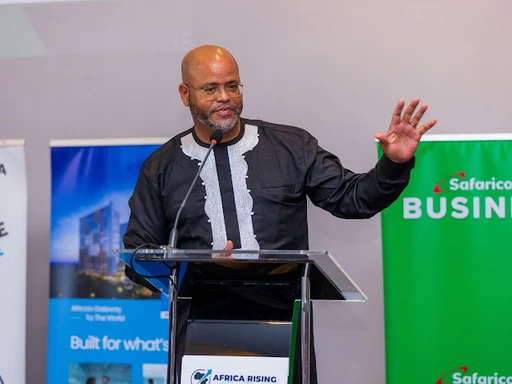
communicate with clarity and composure in environments of uncertainty. They take accountability without deflection or minimization. They demonstrate genuine command of relevant facts and genuine care for those affected. They balance the need for speed in crisis communication with the discipline to avoid premature or inaccurate statements. And they maintain the narrative consistency that demonstrates that their values in crisis are the same as their values in normal operations.
These capacities do not emerge spontaneously under pressure. They are the products of deliberate preparation: crisis communication training, scenario simulation, the development of clear internal decision protocols, and the sustained cultivation of the personal authority that translates to stakeholder confidence in difficult moments.
The Intersection of Executive and Institutional Authority
Executive authority and institutional authority are not independent assets they are deeply intertwined. Leaders who build genuine executive authority amplify their institutions. They attract better talent, command higher regulatory respect, build investor confidence that extends beyond specific operational results, and create the kind of leadership credibility that enables institutions to navigate complex market environments with greater agility than those whose authority rests on institutional brand alone.
Conversely, institutional authority provides the platform on which executive authority is built, like the access to important forums, the resources to invest in visibility development, and the legitimacy that makes executive perspectives consequential rather than merely interesting. The relationship is synergistic, and institutions that invest in developing executive authority as a component of institutional strategy capture the benefits of this synergy.
Building Executive Authority Systematically
The Executive Positioning Process
Systematic executive authority development begins with assessment, an honest evaluation of where a leader currently stands across the five dimensions of executive authority, and a clear identification of the gaps that represent the most significant opportunities and risks. This assessment should integrate self-evaluation with stakeholder feedback. What do the institution’s most important audiences actually think of its leadership, and how does that perception differ from the leader’s self-assessment?
From this foundation, an executive positioning strategy identifies the specific platforms, narrative frameworks, content programs, and relationship development priorities that will build authority most effectively given the leader’s specific context. This strategy should be integrated with institutional strategy, ensuring that executive positioning amplifies institutional objectives rather than operating independently of them.
Execution requires discipline and sustained commitment. Authority is not built in a single initiative or a short campaign. It is built through consistent, high-quality presence over time through the accumulation of credible contributions to important conversations that collectively establish a recognized and trusted perspective.
Avoiding the Authority Traps
Several common failure modes undermine executive authority development:
- Overexposure – attempting visibility everywhere rather than depth where it matters dilutes authority by substituting quantity for quality.
- Inauthenticity – communicating in corporate voice rather than genuine perspective fails to build the trust that authority requires.
- Inconsistency – varying positions based on audience rather than maintaining coherent narrative destroys credibility over time. And
- promotional orientation – using thought leadership platforms primarily to advocate for institutional products or services rather than to provide genuine intellectual value is immediately apparent to sophisticated audiences and deeply counterproductive.
The most effective executive authority programs avoid these traps by maintaining relentless focus on genuine value: providing authentic perspective, consistent intellectual integrity, and real insight rather than promotional content. This requires courage the willingness to take genuine positions and defend them as well as discipline.
Conclusion: Authority as Institutional Infrastructure

The institutions that will achieve the most durable authority in the evolving global competitive landscape will be those whose leaders are themselves genuinely authoritative, intellectually credible, strategically visible, narratively consistent, and prepared for the moments when leadership under pressure reveals the true quality of institutional character.
This is not an argument for leadership personality cults or institutional dependence on individual celebrity. It is an argument for the deliberate, systematic development of executive authority as a component of institutional strategy, for treating the positioning, development, and visibility of institutional leadership with the same strategic rigor applied to other dimensions of competitive positioning.
In the age of transparency, scrutiny, and digital acceleration, we cannot afford to assume authority but to demonstrated it boldly. And the institutions that invest in demonstrating it consistently, authentically, and at scale will find that leadership authority is among the most valuable and sustainable competitive advantages available in the modern institutional landscape.
In complex environments, executive presence is no longer optional. It is structural and it must be engineered with precision. – Milkaela .M. Mwangura
About Eminence Global Strategic Inc.
Eminence Global Strategic Inc. is a premier strategic communications and institutional advisory firm operating across emerging and global markets. We partner with corporations, financial institutions, governments, and development organizations to build the reputational capital, stakeholder authority, and communications infrastructure required for sustainable institutional excellence.
Email: Advisory@eminenceglobalstrategicinc.com | Projects@eminenceglobalstrategicinc.com
